Hearthstone has been doing something very interesting recently – the game mode called “Battlegrounds” is an auto-battler, but in the most recent season they have introduced a concept called “anomalies” which introduces variant gameplay. This was first tried out in Heroes of the Storm, before the game was shuttered. In HOTS, variant gameplay was a testbed for introducing new changes but in HS BGs we are seeing this taken to a new level, almost off-the-rails in the number of variant concepts being introduced.
The gameplay changes shakes up the very core mechanics of the game every time the player plays a round. Instead of minions costing a static 3 gold, they might cost their tier (2-6 gold) to buy. Minions might have new buffs or effects, or maybe tempo is entirely removed from the gameplay equation with a static tier up done without the player’s control.
I find this absolutely fascinating. At first I found it frustrating, but when I began to delve into why I was so frustrated by these shifting rules, I began to realize that the reasons for my frustration are also an example of an entire rewrite of one of the core fundamentals of game design: ***the learning or skill plateau.***
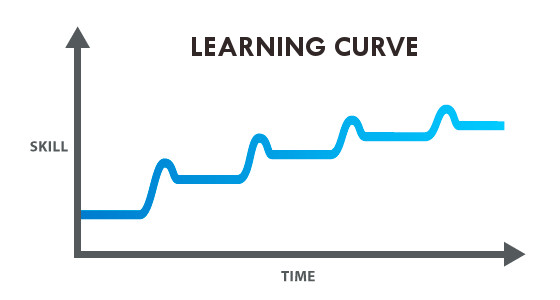
In typical gameplay, the player learns as they play, but eventually they reach a static point where the existing knowledge and skills they have developed are not enough to boost them further. They need external resources to help them have those insights about gameplay and how to improve it. In MUDs, it was analyzing combat logs, in WoW it’s reading parses, in a MOBA it might be rewatching videos of your gameplay – usually there is a third party involved here to help the player get better. A tutor, mentor, tool, something to help the player review their past play in order to improve future play.
Useful links about this concept:
https://www.chess.com/blog/Renate-Irene/understanding-plateaus-and-how-to-beat-them
https://psychologydictionary.org/learning-plateau/
Here is a graph of what that type of learning looks like in something like ELO rating:
https://2.bp.blogspot.com/-1XRt-4Q7Jic/WQ9J_U-A_ZI/AAAAAAAARKg/UmSKOYvErTI98LJo01YrsQCWrlYRAbSQgCLcB/s1600/Trader-Learning-Curve.jpg
Now, with Hearthstone Battlegrounds, we have something incredibly interesting happening. Instead of having a long space and time to develop skill as the player learns, reaches a boundary and then eventually overcomes it, the player is forced to do that within the context of a single competitive game which takes about 15-20 minutes. The sheer number of variant gameplay options means the player can’t deeply dive into the gameplay concepts, but must instead develop strategies which change in ***every single game they play.***
I don’t really have a conclusion here – I’ve just observed this and wanted to pass it on. This, to me, is a big change in a core concept of game design. It focuses learning and skill into emergent tactics instead of more static and long-term improvement. We’ve obviously seen things like this with roguelikes, but they usually have a core underlying set of rules. I feel like it’s showing us the start of an upending of something we assumed to be integral to the concept of gameplay, something uniquely possible through the digital. What other changes are we going to be seeing soon?
**Potential discussion topics:**
– What has spawned this and why would players find it exciting?
– What are the downsides of such a gameplay design?
– Where can this concept go?
– Are we seeing a split in the types of way people game?
Hearthstone battlegrounds, learning plateaus and the changing nature of gameplay
14 Tuesday May 2024
Posted in Uncategorized
 a little bit of everything all of the time