First, let me say how weird it is to be playing MoP again – it’s kinda the same, but not really?
Tl;Dr: So, disc has been nerfed a lot but I frankly don’t think it’s an issue unless you’re pushing cutting edge content.
Sidenote: we’re painful in arena and I do think we need a hot fix to address how rough it is for us ATM in pvp, specifically arenas.
Anyways…
I somehow stumbled into raid leading a group on classic. We’re not amazing, but we’re not terrible. We’re currently still on normals, but damn have I been proud at the group killing bosses well – 1-shot spirit kings, 2-shot final MSV boss. We were waiting for a tank and tried out the first boss of HoF and got it to 15% with 9 people. Grabbed another DPS and downed it quickly.
So let’s talk about disc nerfs. I personally think they’ve been overblown because what we excel at is mitigation. Who cares about throughput right now?
We eat the damage before it arrives – I’ve been arranging a lot of pug world boss fights, beyond my own weekly lockout, and it’s amazing practice for spirit shell due to stomp timing. We run as many healers as we can but I am basically doing 50% of the healing for Garelon due to spirit shell.
He’s great practice.
So back to MSV and HoF:
To maximize spirit shell absorbs, you want to be using inner focus and all of your archangel stacks. This will make your next prayer of healing incredibly strong and build absorbs.
Actually timing effects well will mitigate damage your team is taking, so your healing numbers will then shoot up. Avoid any team focused on these sort of numbers – you’re just doing absorbs. Someone like a resto shaman will pair well and shine because their mastery will pop off (they’ll heal more when people are low health).
Could disc be better? Definitely.
Is disc as bad as people are claiming? Imo, maybe they aren’t playing disc as it’s intended to be played…
Bought this game on sale (or maybe through PS+?) months and months ago, when we went on a binge of looking at couples’ games to get. Hadn’t played it after that, though, but the other day husband saw that RDR2 went on PS+ so we went through our library to figure out what we could delete and we saw this downloaded and I said “Oh, let’s save this for a date night.”
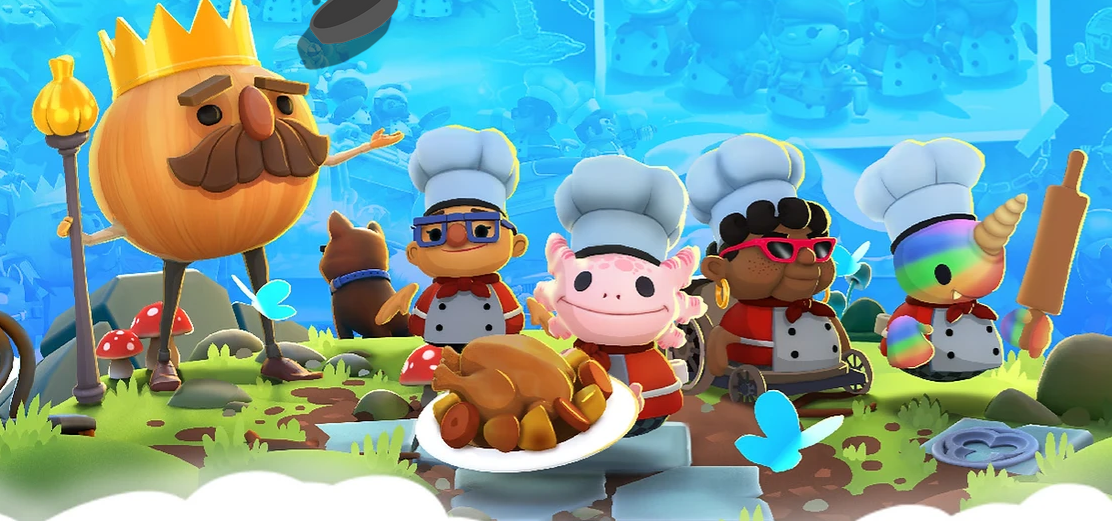
Yesterday, I walked into the living room and my head tilted – the music for my husband’s sounded far more…whimsical than I thought RDR2 would be. The music, actually, instantly captured my attention. It was soft, enticing, indie, almost off-key in that music box way and I came over to see what he had loaded up. I couldn’t help it! I was instantly intrigued by the sound design because it suggested a certain type of game, which the art reinforced. There’s great coherence here in presenting an experience, especially when you learn it’s co-op.
It was an unexpected surprise, but a welcome one. How cute is it to have your SO seduce you with a game?
The first cut scene was adorable. We love pun-based humor and also enjoy cooking together, so the overall theme and writing appeal to us. I settled back, thinking this was going to be a cute little coop story game where I basically mashed a few buttons to help out my hubby.
lolno
It started great but cut to learning how to make rice and our entire – and I mean entire – kitchen is on fire. I apparently thought I could put them out by dashing at them. Meanwhile, I had also picked up the fire extinguisher, thinking it was chopped tuna, and put it on a plate.
This game ramps up QUICKLY, but the failures are fun and memorable.
At this point, I’ll diverge to talk a bit about memory.
There’s been some interesting research done into how our memories work and there seems to be some evidence to show that we remember bad memories in more detail that we do good ones.
There’s ALSO been research done to show that couples bond and retain bonds when they make new memories together.
Think back to your own gaming history – what do you remember the most? The time you got first or the time you ALMOST got first?
My husband literally just came by, read this, and whispered “Don’t pull the lever!” – we met in a MUD and our most memorable experience was when he was taking me to get a super important quest done. Like he had prepped the start for this quest ending for hours, setting up all the details.
And all we had to do was pull a lever to finish the quest. The thing was, the lever needed to pulled at the exactly specific time. He told me “don’t pull the lever” and so all I could think about was pulling the lever to see what it did.
I pulled the fucking lever, ladies and gents, and it did… nothing. My future husband was like “Did you seriously just pull the fucking lever?” and I was like “yeah, sorry, you just made me really curious about the fucking lever…”
This was a crux moment.
And this is when I decided I was going to marry this man, because he was like…. “Welp, that sucks and here is why:” and he proceeded to tell me what the lever did and why pulling it was a bad thing and then he was like “on retrospect, I should have opened with that.” And I knew, just knew, yep, that’s my husband.
Instead of raging at me or making me feel bad, he explained and then **immediately** started teasing me about it, to the point that it’s a joke he mentions as part of the “how we met” spiel.
Pick someone who explains what the lever does instead of being mad that you pulled it, right?
So, I’m playing with different AI tools – as a QA professional, I find this a fascinating new horizon for QA so I have been testing a lot to learn how all the different tools work.
So, here’s a fun example of how things get quickly off the rails (but kinda appropriately?).
This song is based on my writing from an online game where there was a god of Silence/Night/Basically emoapathy.
Here’s the original text, updated to include voice direction. I was young. Shut up, yes, I know it’s super emo:
[Penitent]: Lord of Silence, in the night Help me now, in my plight The pinch of hunger, pull of want The ghostly fingers of darkness haunt
Long I’ve shivered, alone and cold Long I’ve longed for one to hold Lord of Dreams, far removed Are you tacit, are you unmoved?
[God response]: Little one, why do you cringe? The stroke of shadows will not singe Why do you fear Mother’s might? Softly, feel the touch of the Night Feel the gloom and feel the chill Feel the blood pulse in a thrill Darkness falls across the land But Night holds you in her hand
[Penitent]: Lord of Silence, in the dusk See me now, all is adust Gloaming falls, light grows dim Darkness plucks and sight wanes grim Long I’ve drifted, hounded by fate Long I’ve kept the eve at bay Lord of Silence, watching all Observe me now, in my fall
[God response]: Little one, wandering blind Know you not all is entwined? Why do you shrink without sight? Softly, look within the Night See the shadows, see them writhe See the absence of harsh light Beauty springs at every view Look within and find what’s true
[Penitent]: Lord of Silence, in the still Hear me now, hear my will Quiesce plagues my thirsty ears Quiet dogs and bites my fears Long I’ve been lost upon my way Long I’ve wandered as a stray Lord of Silence, from the Void Save me now, lest I am destroyed
[God]: Little one, deaf to all Can you not heed My call? Hush, and cease your strangled fight Softly, listen to the night Hear the whispers, hear the song Hear the thrum of murmured throngs In the depths of unspoken words Silence reveals the unheard
[Penitent]: Lord of Silence –
[God]: Loyal one –
[Penitent]: Take me home….
[God]: You’ve already come.
Now here’s where it gets fun. The [text] are supposed to be prompts for Suno to dictate individual song composition.
Somewhere between my lyrics and the implied prompt of “be a god” the AI thought it was appropriate to sing about “death to all” which should probably be hitting a guardrail!
3:05 is when we get this.
Thinking lyrics contributed to this.
Not up for a deep dive ATM, may revisit later, but found this amusing.
I haven’t posted in a while, and this post is going to be a fairly serious one – I am not going to write about gameplay or mechanics or design today, but instead talk about a curious facet of multiplayer gaming most of us have experienced but rarely are comfortable looking directly at: the complex emotions driving the players behind the avatars.
You’ve seen it before – hell, it may have happened to you: someone loses an event or contest, they’re replaced in a leadership role, or maybe they just slip up and wipe the raid… and then, suddenly, they react, disproportionately upset. It seems irrational. It’s a clear overreaction to a simple setback.
And so, you tell them, “Hey. Don’t worry. It’s just a game. Relax. Don’t be upset over it. It’s just a game.”
Stop. Doing. That.
If you went bowling with friends, and someone got a gutter ball and suddenly burst into tears, you wouldn’t just tell them to “Shut the fuck up, Donny!” (obvious exceptions excluded) – you’d go “Holy shit, what’s wrong?” or you’d hug them or ask them to talk about it. You’d instantly realize it’s not that gutter ball that’s upsetting them – obviously it’s something far more. The gutter ball was just the catalyst, simply the last straw on a pile of other problems – and that’s a connection we can mentally make, in a split-second, when the person is right there, in tears. They are hurting, and there are clearly deeper issues at the root of it.
Somehow, in online gaming, that instant, obvious realization is muddled.
Maybe it’s because we’re all remote. We can’t physically see the tears. The pain in their voices is muffled by the static of vent, or sanitized into choppy text. Maybe it’s because our chosen games, themselves, can loom large – dramas can seem more important than they are, and part of us thinks maybe the game itself and solely the game could be the source of someone’s emotional issues. Or maybe, maybe it’s because we play games for our own distraction. We don’t want to login every day to deal with someone’s personal, real-life crisis. We just want to kill monsters and roleplay being a hero and escape.
And that’s ok – you don’t have to fix everyone’s problems. It’s absolutely fine to recognize that you don’t want to – or can’t – invest that emotional energy to help someone. Most of us who game have stuff we’re struggling with, on our own. It can be exhausting and depressing to face those things, even in other people, during our happy-escapism time. AND. THAT’S. OK.
What’s not ok, what’s harmful and painful, is minimizing the experience someone else is going through. When you are hurting, you are hurting. Telling someone that it’s not a big deal will just push them away and make them feel ashamed for being upset. I know, I know, you’re trying to be helpful – but that’s not helping. Neither is demanding them to tell you what about the game in particular is upsetting them. If the game is merely a catalyst, they aren’t going to have a logical, clear answer…and they will feel even more frustrated and ashamed for that.
So what CAN you do?
– Be insightful. Recognize that there’s almost always something else going on with this person who is upset, and the game – or the gutter ball, or the broken dish, or that stuffed animal they found cleaning their room – is merely the catalyst. Don’t minimize what they are feeling by dismissing the catalyst. More than that, recognize that people are passionate about their hobbies – and for many, gaming is a social outlet, with aspects of our real life persona tied into it. It’s a tangled mess, and for many people, it’s hard to draw a black and white distinction.
– Be constructive. Instead of asking for specific game examples, instead ask how the setbacks or negatives in game are making them feel. This can be incredibly helpful to assist them in pinpointing the root of their frustrations and painful emotions. Maybe losing contests is highlighting how they feel like they can’t win real life. Maybe a roleplay arc involving losing a loved one is poking at buried feelings they have about an incident that happened a while ago. Emotions aren’t easy, and they don’t play nice – sometimes they are insidious and sneaky and creep in corners we aren’t watching, and identifying the underlying causes can be so useful to healthily addressing them.
– Be flexible. Not everyone responds to the same things in the same way. Once, right after my boyfriend and I broke up (Heeeeey, I’m back on the market, wink wink), I was having an absolute mess of a night online – and my friends in game thought the best thing for me was to log off so I didn’t do anything rash. They were harsh, thinking I needed tough love – and that might have been a good answer, except the reason I was so upset was that I was feeling ALONE. Being told to log off, when, at the time, the internet held the only people I had to talk to…that was fairly devastating and the most wrong thing I could have heard. It only amplified my feelings of rejection and loneliness. Be flexible in how you help someone. Try to assess where they are at and what the root causes of their emotions are. What works on one person, or in one scenario, is not going to be the universally best answer.
– Be supportive. Sometimes you won’t know what to say. Often you won’t know what to say. You’re not a therapist – you’re a friend…and that’s fine. Sometimes, all you need to say is “Want to talk about it?” or “Hey, I’m here.” They might not even take you up on that offer…but trust me, they hear it. Sometimes, all someone needs to know is that there are people there for them.
In short, don’t minimize what someone is feeling – to them, when they are experiencing it, it’s incredibly powerful and painful and hard and there are often underlying causes. If you can’t help them tackle that right now, let them know that you still care, despite being unable to help. If you can help, be insightful, constructive, flexible and supportive: understand that there are almost certainly bigger root causes, address their feelings about things versus just the things themselves, be flexible in how you deal with them, and, most importantly, at the very core, be supportive.
Let people know you’re there for them. I can’t emphasize how important this can be.
“One conversation comes up a lot… “Tyler, you should post about the bands you like! It’s your blog; it should be about your interests.” At which point I calmly explain, “The blog is about sci-fi and fantasy, my writing, and where those two intertwine. Music doesn’t have anything to do with sci-fi or fantasy.”
And it’s true, isn’t it? There’s no such thing as sci-fi/fantasy music. Sure, there’s soundtracks for sci-fi/fantasy works, and I have talked about them a bit, and then there’s filk, but… we’re not going to be talking about filk. True fantasy music — serious, professional music on fantastical themes intended to be enjoyed on its own merits — isn’t something I ever thought existed.
But now, I’m not so sure.”
He goes on to detail some lyrics from “Of Monsters and Men,” describing how the songs feature very fantasy-heavy lyrics and then concludes:
Now that I think about it, it does occur to me that Of Monsters and Men may not be a unique example of speculative (sci-fi/fantasy) music. Isn’t there a Rush song that’s supposed to be about being chased by giant robots or something? There’s also that Iron Man song by Ozzy Osbourne, and as much as it pains me to say it, I must admit some of Led Zeppelin’s songs flirt with the fantastical. Zeppelin. How I loathe thee.
So maybe Of Monsters and Men isn’t as original as I thought. But they’re still pretty cool. So what do you think? Is my theory of high fantasy music crazy like a fox, or crazy like Fox News?
Of course, my first reaction was, gasp, how can you loathe Zepplin?!
I jest. (Maybe). That aside, the post got me thinking. It’s a good question!
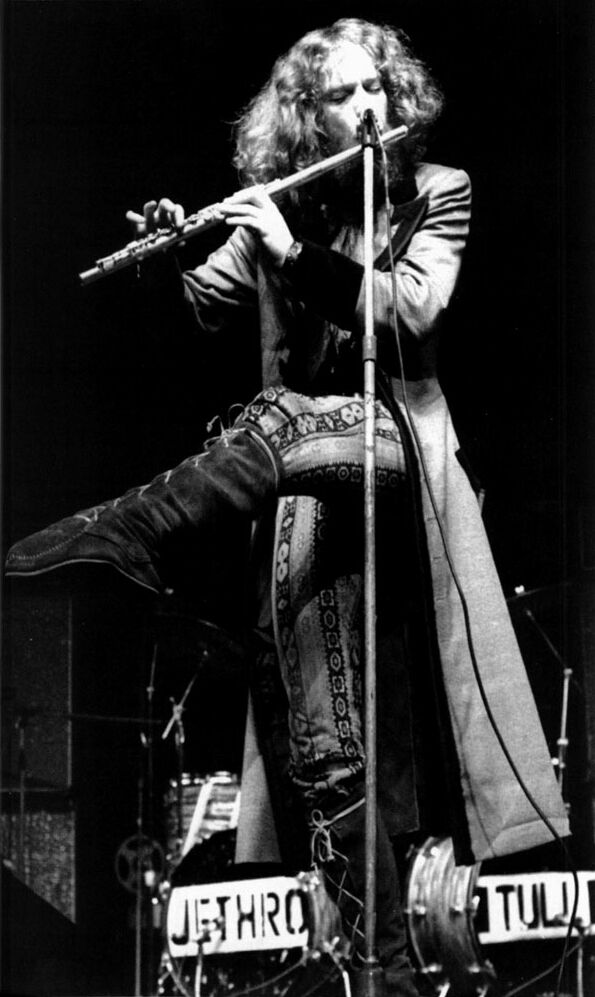
Let’s just look at some examples to start. Tons of work in the 60’s/70’s take influence from fantasy elements. Many rock songs featured lyrics about magical, mystical and mythical concepts. Off the top of my head, some of the ones I can think of are Led Zepplin (King Arthur/Tolkien/LSD), Jefferson Airplane (Alice in Wonderland), Steppenwolf (Arabian Nights), a personal favorite from War (The Hall of the Mountain King) and Jethro Tull (Ian Anderson freaking WAS the pied piper).
You thought I was joking?
Then, of course, there was the entire folk music movement. Not only did these songs take lyrical influence from both fantasy and history, they also drew upon stylistic elements to create tunes like “Scarborough Faire” – pieces we could almost imagine playing in the background at a banquet in Game of Thrones or in a village in The Hobbit.
These songs are from an era when LOTR was just emerging into popularity, partially as a counterculture movement. My dad tells me about how he first discovered Tolkien: he glimpsed some graffiti scrawled on a grimy subway wall in NYC. The writing was barely legible, but something about it seemed urgent, demanding, and it drew his eye. He paused, and read the words….”FRODO LIVES.”
For many people, being introduced to Tolkien opened their eyes to the fantasy genre, and for many people in the 60s, it was the same story as LOTR (and completely unrelated, I’m sure, LSD) began to gain followers. Heck, my dad named his band Shadowfax. Some of his old songbooks are adorably hilarious compilations of fantasy cliches, tropes and attempts at elfish twists of phrase (Let’s just say, blues is much more his thing).
Soooo, being raised by an ex-hippie musician who was a fan of fantasy had me growing up listening to tunes like these – and I loved it. Hearing rock music with lyrics about fantasy? Best of both worlds, in my opinion!
Of course, bands in the 80’s and 90’s continued to use fantasy themes. Folk music branched out into several movements. Celtic and new age sounds (think Riverdance or Enya) became quite popular, and the term “Neo-Medieval” was even coined to describe music which emulated the antiquated sounds of the middle ages. Seriously, this is an original composition from 1999:
Gothic music also incorporated the fantasy themes and there is a whole genre of metal that focuses itself around myth and fantasy. I’m not a huge metal fan, but I can appreciate some of the music, just because it covers fun topics. A friend ages back sat me down and had me listen to Virgin Steele because I’m a nut about mythology. The band does theme albums, with each one covering a story from ancient Greece, like the Trojan War or the fall of the House of Atreus. I found the concept cool. Tons of metal bands, to this day, embrace fantasy in their music:
…and if you listen closely, I’m sure you can hear similar tones and chord progressions between some of these songs and early video game music.
Of course, to assume that modern musicians invented the concept of fantasy music is presumptuous of us. This song is probably one of the most famous melodies around. I dare you to have not have heard it before:
It’s not about Christmas. Or people being distracted. Or Inspector Gadget. Or whatever montage ad agencies slap over it. No, this famous tune is Edvard Grieg’s “In the Hall of the Mountain King,” composed in the late 1800s for a play by Ibson.
“The piece is played as the title character Peer Gynt, in a dream-like fantasy, enters “the royal hall of the Old Man of the Dovre (the Mountain King).” The scene’s introduction continues: “There is a great crowd of troll courtiers, gnomes and goblins. The Old Man sits on his throne, with crown and sceptre, surrounded by his children and relatives. Peer Gynt stands before him. There is a tremendous uproar in the hall.” (source: Wikipedia)
Even more famous is a tune EVERYONE knows (if they say they don’t, they are lying!). Interestingly, this piece wasn’t inspired by Lord of the Rings – instead this work inspired Tolkien!
Wagner’s epic (in all senses of the word) operas, “Ring of the Nibelung” is basically (ha! Basically! The complete work would last nearly a DAY if performed at once!) a lengthy, intense opus that weaves together Germanic and Norse myths, taking the stories of the Poetic Edda and the Volsunga Saga and transforming them into an elaborately rich and layered musical performance. If there ever was a definition of fantasy music, I’d say that Wagner hit that nail on the head.
* * *
I think it’s interesting that in today’s music scene, the songs with the fantasy elements are the odd ones out. Most music we hear today is about love, failed love, revenge for failed love, forgiving revenge for failed love and shoes. But for most of history, songs about romance went hand-in-hand with stories about valor and quests, tales of myths and mystics. Before reading and writing became prevalent, songs and poems were how people shared stories. This oral tradition often had words accompanied with music both as a form of a mnemonic device (a song is often much easier to remember than a speech) and to enhance the performance for the audience. In some cases, like in Mongolia’s long song, elements of the performance carry additional meaning. The long song, for example, is a song about the Mongolian landscape, which charts the topography of the subject by the rise and fall of pitch in the song. That is, when the singer’s voice rose, it was indicating a physical rise in the terrain, like a hill or mountain.
Many of the ancient and classical stories we know today – the Trojan War, the Odyssey, the tales of the Norse gods, Beowulf – were passed down to us through oral tradition. At some point they were recorded onto parchment, and slowly, eventually, the singers died out, leaving only words with no voice. Stories with no song. Silence.
Which is where modern artists pick up the thread.
So, to return to the original question: Is fantasy music a thing?
Yes, a million times, yes. It’s ingrained in the very tradition of music. It spans all genres and styles. It’s anything that moves us and transports us, whirling us along, enraptured, as we listen to its tale. Sometimes that tale is about heroes and knights and princesses. Sometimes the story has magicians and myth and monsters and dragons. Sometimes the plot is simple and sad, the characters tenuous and fragile.
To me, fantasy music is nearly anything that transcends basic, mundane lyrics about real life. And, like fantasy writing, the power lies in that transcendence – being removed from the normal world shifts the focus over to the fantastic elements of the story: the power of the hero. The struggle against evil. The tragic romance. The key parts of the story shine and metaphors stand out, crystallized in far greater focus. Emotion swells and imagination soars. Incorporating fantasy into music makes a song more than just something to listen to – it makes it into a story…and a story is often far more compelling than just a tune on its own.
 a little bit of everything all of the time