Hearthstone has been doing something very interesting recently – the game mode called “Battlegrounds” is an auto-battler, but in the most recent season they have introduced a concept called “anomalies” which introduces variant gameplay. This was first tried out in Heroes of the Storm, before the game was shuttered. In HOTS, variant gameplay was a testbed for introducing new changes but in HS BGs we are seeing this taken to a new level, almost off-the-rails in the number of variant concepts being introduced.
The gameplay changes shakes up the very core mechanics of the game every time the player plays a round. Instead of minions costing a static 3 gold, they might cost their tier (2-6 gold) to buy. Minions might have new buffs or effects, or maybe tempo is entirely removed from the gameplay equation with a static tier up done without the player’s control.
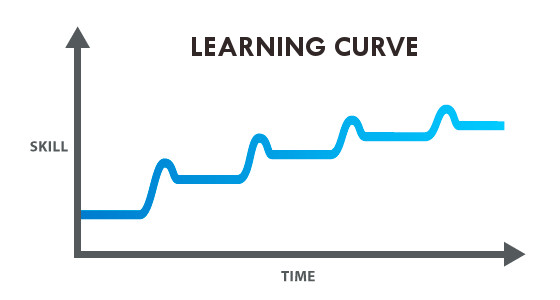
I find this absolutely fascinating. At first I found it frustrating, but when I began to delve into why I was so frustrated by these shifting rules, I began to realize that the reasons for my frustration are also an example of an entire rewrite of one of the core fundamentals of game design: ***the learning or skill plateau.***
In typical gameplay, the player learns as they play, but eventually they reach a static point where the existing knowledge and skills they have developed are not enough to boost them further. They need external resources to help them have those insights about gameplay and how to improve it. In MUDs, it was analyzing combat logs, in WoW it’s reading parses, in a MOBA it might be rewatching videos of your gameplay – usually there is a third party involved here to help the player get better. A tutor, mentor, tool, something to help the player review their past play in order to improve future play.
Now, with Hearthstone Battlegrounds, we have something incredibly interesting happening. Instead of having a long space and time to develop skill as the player learns, reaches a boundary and then eventually overcomes it, the player is forced to do that within the context of a single competitive game which takes about 15-20 minutes. The sheer number of variant gameplay options means the player can’t deeply dive into the gameplay concepts, but must instead develop strategies which change in ***every single game they play.***
I don’t really have a conclusion here – I’ve just observed this and wanted to pass it on. This, to me, is a big change in a core concept of game design. It focuses learning and skill into emergent tactics instead of more static and long-term improvement. We’ve obviously seen things like this with roguelikes, but they usually have a core underlying set of rules. I feel like it’s showing us the start of an upending of something we assumed to be integral to the concept of gameplay, something uniquely possible through the digital. What other changes are we going to be seeing soon?
**Potential discussion topics:**
– What has spawned this and why would players find it exciting? – What are the downsides of such a gameplay design? – Where can this concept go? – Are we seeing a split in the types of way people game?
I *love* Trial of Style. It lets me show off fun transmog, get new stuff and boosts my transmog sales on the Auction House. Here are some thoughts on how to improve the concept:
First, make it more regular or even permanent, based on participation numbers.
With this, add some sort of overall faction or even several. There is a lot of potential here for fun NPC personalities we don’t see usually much of: goblin stylistas, a bespectacled gnome who hates capes, a range of crafters, Ethereals. Earn favor with them to obtain things like recipes, pets, gear, on-use effects like the summonable transmog tool. The typical faction setup.
Introduce a pool of broad themes that rotate either weekly or each time the event is held. In addition, add multiple venues which are each themed, eg the current one is Silvermoonish. Pull the current competition category from a pool of prompts from generic themes + rotation theme + location theme. This gives us a fresh rotation while also maintaining variety and the potential for favorite classic themes.
Having a rotating theme opens the door to more varied gameplay with transmog as the motivation. For example, if the theme was fire, you might find yourself visiting Molten Core or Firelands to get specific pieces. Lean into this by adding global buffs that match the theme, eg things like increased cloth, leather, ore, herbs or legacy loot drops in zones associated with that theme. This would add excitement and directed gameplay variety to running old raids and old world crafting.
The trial itself could be revamped a bit. First, it’s far too slow. Each voting round should be 1/4 the length it is. Ranked choice is another alternative to consider – maybe display each player on the stage and let us inspect them ourselves, and then rank them from first to last.
The voting itself is inherently flawed because some folks will always try to game it to ensure the nicer transmogs don’t beat them – it’s why you often see the lower quality ones win. Why don’t we have voting be for a team the player *isn’t* competing against? Match up 2 parties against each other and have them vote for the other party. There’s nothing be gained from tanking ratings in this scenario, so the end result will be more genuine voting.
There’s plenty more we could add in to make the event more fun AND help stimulate the economy in a sector that’s been neglected. Examples include ideas like:
– Make the prompts more evocative and varied. Some of them are a bit too vague and there aren’t enough in the pool. As an example, an overall Fire theme could have prompts like: Fire’s Wrath, Cleansing Fire, Extinguished Flames, Firehawk, Elementals, Too Hot To Handle, Chilled Flames, Hot Stuff, Fiery Memories. This gives a range of potential interpretations and designs with each prompt which helps ensure replayability.
– Make it super easy to share/copy/save transmogs you’ve seen. Find a way to plug this into the auction house, collection tab and explorer journal. Basically breadcrumb buying or farming.
– Upgrades to existing transmog, which use crafted or found base items and morph them into a new or recolored or updated design. This will help with the economic issue of transmog becoming less needed as player collections become filled. It could be tied into old world crafting patterns to help ensure a slow and steady demand, which would uplift old material prices as well, ensuring more types of gameplay can be profitable. It would also help push down extreme prices because a larger market means it’s harder for one person to corner.
– Drops off old bosses for items usable in trial of style, like cheer squads and spotlights in different colors
– Crafted recipes to make things like a sonic enhancer that plays a theme song you pick (engineer creates enhancer, scribes make scrolls to play for riffs?), a red carpet to walk down, a stampeding swarm of spiders – all of these are silly fun but if there’s enough variety players can use visual effects to help enhance their transmog display, such as a red spotlight and flames at their feet for a fire-themed competition
– Let us display a battle pet, mount and title along with the transmog
– More minigames beyond just the judging. Match up colors or gear to a displayed transmog (see dress up games for gameplay like this). Have a timed trial to make an outfit featuring X color. Have a quiz about where different items are sourced from.
—-
Anyways, this is quite long. What sort of updates would you like to see in trial of style?
First, a big ol’ disclaimer – I do NOT endorse meter cheesing. This is simply NOT productive to a good raid team. Numbers, on the whole, mean very little without context, so getting “high” numbers are a healer are not nearly as indicative of performance as they are for a DPS – and even for DPS, raw numbers don’t illustrate the whole picture of performance. For healers, this is even more true, as there is a lot of context to bear in mind: does the healer have an assignment (ie tanks), is one healer absorb-heavy (which will eat heals first), who’s using CDs well, etc. In short, there’s a lot more that goes into analyzing what a good healer is beyond meters.
That being said, sometimes you just want to blow everyone else away. Here are a few tips to help with that. Also…a bit of analysis into why meters are a sneaky and dangerous metric (I might make a longer post about this later).
First, a few circumstances in which it’s debately ok to play the sniper:
A really out-of-touch guild recruiting. Sadly, this still does happen, so sometimes you need to make your numbers look baller to get a spot on the team. I’m so fortunate in that my team’s leaders listen to my input about healers instead of looking at raw numbers – my analysis always includes CD use and spells, and I’ve actually rated “top” healers lower than others because they were doing things like blowing CDs early to make themselves look good, number-wise, which meant they didn’t have the CDs available when we really needed them.
Trash and/or farm night. Sometimes you just want to look good or push yourself to see what sort of numbers you can pull. Try to chat to your other healers to get them on board with padding.
Ranking attempts. Same as above – talk to your healer-mates to get them on board with this. If you all can take turns trying to rank, then everyone is happy. As a side-note, the ability to cheese also means that people tend to not take healer rankings as legit pretty quick after a tier is released.
My only legit (non-cheesed) ranking. My team is a social guild, be nice, we go a bit slow!
LFR HERO TIME. Sometimes it’s just one of those bottle of wine and “I NEED VALIDATION DAMNIT!” nights. Sorry to everyone else, but I totally get this, and this is the main factor I’m writing this article. You, too, can blow through LFR and feel like a hero!
Just to balance that out, here are reasons to AVOID meter cheesing:
To be the “best” healer. I don’t want to derail my own post, so I won’t go into the many, many reasons why simple meter numbers (especially when a disc priest is in the mix) aren’t indicative of performance, but suffice to say that good healing is a combination of many factors. Raw numbers only go so far. If you are a disc priest, especially, there is a very dangerous line you can walk where attempting to cheese meters to get “top” numbers will OOM you and DOOM the raid (see the letter containment! Clearly not a coincidence!).
To shut down another healer. Never never never never ever fucking do this to another member of your healing team. Healers are a TEAM. We have to be able to work together. If you’re in a big enough raid that is running two discs, don’t you dare try to double-dip into their zone and hinder their healing to make yourself look good. That’s just not cool and not what a team player does. I’ve heard of this happening, and it’s just really uncool. Don’t be that guy.
To prove your worth. Again, some raid teams are not enlightened. Instead of throwing your other healers under the bus (again, we’re a team!), try to illustrate how your healing works – the sorry truth is that most people just don’t understand unless they are a healer. For example, our raid team thought our shamans weren’t very good because my numbers were comparatively much higher, especially on farm. I had to make it super clear tonthem that shamans are not gonna shine unless the raid is fucking up or we’re taking a ton of damage, but once they do, we’re blessed to have one – they were simply unaware of how the mastery worked, especially with absorb interplay, but once they got the concept they were like omg shamans are amazing with disc. Yes, my padawans, they are.
Right, all that being said, here’s the nasty trick section. You’re a terrible person for using these. Enjoy. Talent Choices
First thing you want to assess is your talent choices. Here are a few rules of thumb, going down the tree:
Tier 1 (level 15): Desperate Prayer. This is an easy, one-touch heal. See below about self-damage for how to use this best.
Tier 2 (level 30): Body and soul. Unless you are great at laying down feathers, pick B&S for extra mobility to squeeze out as many heals as you can before having to move (with a super fast run speed). If you can lay down feathers on your route, power to you. I’m not the best at it, and I prefer the free speed boost with the shield I’m already going to cast (again, see below for self-damage), so I’m not wasting GCDs.
Tier 3 (level 45): Surge of light. Take this talent if you don’t need mana regen. Free instant heals! This works ESPECIALLY well with Divine Star. Gauge this on an encounter-to-encounter basis. If your team is wiping a ton early on, definitely go for it, as you aren’t running out of mana. If it’s a fight you know (or assume) the group will finish, gauge your own mana use (see mana regen below). If you’ve not got much spirit gear, go for Power Word: Solace. Only use mindbender if you know the fight is super movement heavy and that you won’t be able to use PW:S effectively.
Tier 4 (level 60): Do NOT take Dominate Mind. That’s healing uptime lost. Beyond that, not relevant for meter cheesing.
Tier 5 (level 75): This one is a highly variable one and will shift from fight to fight. Some good tips:
If the fight does PREDICTABLE damage *and* you know there will be a group of people together within range, take Spirit Shell. Remember, this spell is based on GROUP casting, so if your team is spread, it’s fairly useless.
If you are progressing or the damage is super high (or your team is just really bad) go for Twist of Fate. It’s a free 15% boost to everything. When my team is progressing, the uptime is around 50-80% (also, tip: adjust skada/recount to have a display showing buff uptimes, so you can easily see if a spell’s effect is worth using!).
Power Infusion is legitimately useful in a real raid scenario, but if you’re cheesing right you don’t need the mana reduction (see mana use below), and the haste buff doesn’t compare to Spirit Shell’s cheesing potential. If you’re in a situation where the damage is meh and groups are spread, then take it.
Tier 6 (level 90): Like with Tier 5, this one will vary on the situation:
Cascade: Everyone is spread out pretty erratically, or in clumped groups, and/or your team is pretty small. A melee/ranged group with a small team is the perfect situation for cascade to shine. Cascade is limited in bounces, so it’ll shine more in smaller teams.
Divine star: Everyone is grouped. This spell scales in awesome the bigger your team is. This spell also generates lots of nice FDCL procs!
Halo: Huge spread and large team means more effectiveness for the spell.
Tier 7 (level 100): As with the other talents, this one varies per fight:
Clarity of Will: Do you have time to reliably cast this repeatedly (sup Hans and Fraz)? Are tanks taking continual damage? Is there another disc priest in the raid? If any of these boxes are checked yes, select this.
Words of Mending: If you’re moving yer butt a lot, take this, but if you’re trying to cheese hard, I advise against it, unless it’s a fight you literally cannot find a time to get the cast off in. Again, this post is about the cheese, so, while I would advise it in legit raids, in cheesing, it’s nearly as bad as…
Remember, you’re cheesing. When cheesing, you don’t work as a teammate, you don’t coordinate with other healers, you are just in it for yourself. Mana regen is just part of that equation.
Regen rule of thumb: Aim to play as fast and loose with mana as you can. If you heavily suspect your team is going to wipe, don’t bother with any regen concerns – they’ll be dead before mana becomes an issue. In general – even with good healing – you should be pushing to be near low to none mana by the time the fight ends, imo, as any mana you have left means those are spells you didn’t cast. If you can scrape through a fight with mana actively leftover for spells, then direct your talents to throughput spells like FDCL.
Regen Channeled Pots: These give significantly more than a chuggable mana potion, but put you out of the action while you’re drinking one. As a cheeser, the strain this puts on other healers should not bug you – in fact, it’s a benefit, in a way, as it ensures they pump out mana while you’re inactive and then leave more things for you to heal once they are struggling with mana. Just make sure that no ground effects are about to go out before you drink!!! Do it when the healing is most light AND after you’ve blanketed the raid in absorbs (if you do really want to play fair with other healers, though, announce when this is about to happen, so they can be prepared – ideally during a downtime, eg after a clean transition in Blast Furance).
Self Damage
Right, it’s bad, but every healer aiming to tops the charts does this. As a disc, it’s super easy. That being said, there is an art to it.
Self damage: The most basic form of this is standing in shit after bubbling yourself. It’s simple yet effective. It’s free healing numbers. Dip in and out to pad the meters.
Using CDs: This is a bit more sneaky and clever, and I’d honestly advocate it in a raid, period – if you know that you can survive the damage, use something like desperate prayer or a health potion to keep you alive while you attempt….
Damage Eating: Sometimes, taking damage isn’t really that bad a thing. If you can survive it, as a cheeser, it’s worth it, especially if you get to cast some spells.
Damage Analysis: This is actually solid healing, so no judgements! When spells are coming at you, as a disc priest, you should always analyze your effectiveness from casting the spell vs your personal damage from it – sometimes it’s better to simply just sit and take the damage, if you KNOW you will live. As a cheeser, this is doubly true!
Maximizing Your Own Numbers
Again, as before, when you’re cheesing, you’re in it for you. Don’t worry about coordinating stuff. Some tips:
Actively call for buffs: If you are out for yourself, and to increase your numbers, call for buffs in conjunction with heavy healing you’ve got setup. People often will pop spells like amplify magic if they hear it called out.
Don’t use shit that doesn’t show on charts: If it’s all about the bass bout the bass (ie the meters), don’t use Pain Suppression or Power Word: Barrier. Sadly, I’m being 100% honest here – if your goals are chart topping, these SUPER USEFUL spells don’t reflect anywhere on meters, so using them just means you’re siphoning off damage but your mitigation efforts won’t be recognized. If you’re trialing with a shitty guild who doesn’t recognize CD use like this (or going for LFR glory) , don’t use them. Yes, it hurts my soul to write this.
Snipe like a fucking pro: Oh, yes, this needs its whole own section….
Sniping Like a Pro:
Right, so, here’s where the whole meat and potatoes of disc priest cheesing comes into play. Talents and whatnot are just icing – the gameplay itself is how you steal top numbers. AGAIN, I JUST WANT TO MAKE THIS CLEAR, I DO NOT CONDONE THIS FOR A COORDINATED RAID TEAM – but if you’re in LFR, and your man just dumped you, and you need a feel good, you go girl. You use these tips. I’m not judging.
If you liked then you should’ve put a bubble on it: Disc priest is soooo potent in that we can absorb incoming damage. For someone new to the role, that concept may seem a bit weird – but this is the entire reason I am writing this guide. End of the day, us discs are all about stealing everyone’s heal. It might be a bad design, but that’s the design we’re given. If you know there is damage coming, you pop up those absorbs.
Raid damage: If you know there’s a mechanic that’s going to deal damage to the raid (think…everything Blackhand)…bubble as many people as you can.
Tank damage: Always be bubbling the tanks. Always be using Clarity of Will on the tanks (especially if there is another disc priest, this expac has us going full hunger games on each other).
Derp damage: If someone is taking damage, do your best to assess WHY. If it’s continuous, bubble them. They are standing in fire, but whatev, who cares, you are here for the numbers. If it’s just a single spike, ignore them. You’re wasting a bubble on them. Don’t touch them unless you have a flash heal or penance free.
Bonus Rounds: You can use spirit shell to blanket an entire group from damage before it happens. You can ALSO smash shit a few times and build up atonement procs and then activate archangel – when you cast Prayer of Healing, with your first archangel cast, it’s an automatic crit, so everyone gets Divine Aegis. This means they will be sitting with absorbs before the damage even goes out.
It’s all about the snipe: Remember that most of our casts take time. Start a prayer of healing and be prepared to jump to break the cast if nobody takes damage. Cast holy nova or cascade 1ish seconds before the damage is due to go out – as disc (sniping or otherwise) it’s key that you know when damage is coming. If you can constantly be the one with the heal finishing right when the damage lands….it will break them down. That’s the ultimate fealty you can ask for, as a disc priest – your other healers bowing to you, crying, and asking you to just let them heal.
Hopefully I’ve helped you out in your task to destroy other healers and win LFR. If you have any other questions, feel free to ask them in the comments. Happy healing!
Figured this would be a good topic – share your thoughts and tricks on leading orgs! Note, this refers to MUDs, and cities, but WoW guilds can snag a lot of the same ideas. Here are my tips:
– The “Oh?”: I use this all the time. People often want to talk. Invite them to elaborate, simply asking “Oh?” when they bring up a topic. Let them have their own, unbiased window to chat about an issue.
– On winning elections: Nobody ever follows my advice with this, but this WILL win you an election….and bring you into office with a powerhouse of ideas to work with: don’t ask for votes. Don’t rely on a post. Go to people, one by one, and ask them what they want and what they think. You’ll get some REALLY COOL ideas, and people will remember that you were the candidate that directly listened to them.
– Take feedback. Often. I actually turned this into an active scheme for my city, with credit/promotion rewards – feedback is super crucial to running an org well. You’d be surprised the type of things you’re overlooking, as well as the ideas you can snag.
– FUN > all. Don’t bankrupt your org, but don’t be afraid to splash out to ensure people have fun. Money or credits spent to make things fun are merely an investment in the game and individual characters…there IS a return on that investment, eventually.
– Focus on the positive. Don’t punish for not doing – reward for doing.
– Create a culture. Orgs thrive on an identity. Encourage memes and in-jokes, repeat motifs until they become canon. Treat NPCs like they are real and build up storylines for them. Really reinforce what your org is – a strong identity makes it easy and fun to participate.
– Encourage people. If someone wants to do something, find a way to make it happen. We’ve got a ton of tools at our disposal, and it’s pretty impressive what we can accomplish with a bit of crafting, RP and gumption. If someone wants to try something out, your first answer should be “Sure, lemme figure out how to make that work.” The more people you get engaged, the better your org will be.
– Exploit your rank. Being an org leader kinda puts you on a pedestal, and that’s a really useful thing to use as leverage. Taking a spin at the dunk tank, or giving a recruit an interview – that’s potent and leaves an impact. It carries a lot more weight than anyone else doing that, and you can and should play up that privilege.
– Wade in there. It’s super easy to get caught up in paperwork and delegation – make sure to make an appearance every now and then. Aetolian leadership is often heavily about the cult of personality – and if you fade away from an active presence, your org is going to dwindle in response.
– Ask people for favors. This is a weird psychology thing, but people tend to feel more loyal and aligned with you if you ask them to do you a favor. It shows that you trust them, and that they are part of the pack, etc etc psychology stuff. Let’s be honest – as a leader, you’re probably swamped with work as-is. This is a complete win-win: you get help and the person helping out feels great for being able to chip in.
– Don’t be afraid to be the butt of the joke. Some of my biggest successful events as a leader have ridden on me being a complete goof or taking a fall. People LOVE seeing their leader humanized and relateable – a spin in the dunk tank, reciting a silly poem, paid to not talk or change your title, these kind of things are great ways to get people excited and engaged. It doesn’t mean your org hates you – on the contrary, it means they love you. If they didn’t like you, they wouldn’t care about messing with you!
– Public praise, private condemnation. Obviously there are times when you need to step in and say tsk tsk, but for the most part try to keep punishment between you and the person being punished. There’s already a harsh sting to being punished – publicizing it makes it 10x as dramatic and painful. On the flip side, make praise super public! This tells people what’s good to do to earn rewards, it makes the praised person feel good (if they are privately praised, they are left wondering why they aren’t good enough to be recognized publicly), and it uplifts morale.
– Credits/gold are for spending. Don’t hoard. Share the wealth with your orgs. Earning gold/credits motivate people to login more. Stockpiling gold isn’t a priority – we don’t have a war system and there isn’t a need to buy a ton of troops at a moment’s notice. Spend that gold on citizens, or buildings, or whatever inspires RP and activity.
– Foster RP. This is probably my proudest achievement as a CL. Be a RP facilitator – toss out an open-ended activity/RP prompt. Create events that encourage people to interact in fun ways. RP is super engaging, and finding ways to inspire it is the crux of good event building. It’s not about the show – it’s about the interactions the show prompts.
So, I am playing with making a (rather silly) story writeup for my D&D group. Chapter one is up. Enjoy!
Boatstorm
—
Lightning split the skies. Thunder roared. Even the waves beneath the ship churned in a rather irritated fashion. Shit was a mess.
….aaaand so was the vomit (and other fun), the elf noted, as she sidestepped a fresh flood of the upcheck. Her nose wrinkled in disgust as she daintily avoided the seasick, and she flashed a disdainful glare at the idiot stupid enough to shit on (perhaps literally) her ship deck.
The source – a towering mass of red curls and meaty muscle – was unique enough to give her pause, regardless of the storm. It was rare to see a truly honed and dedicated fighter, but something about the casual cant of the notched and pitted axes slung across the poor woman’s back suggested that – when she wasn’t vomitting – she could give any guard company of royal soldiers a run for their money….even if they were all attacking at once.
The elf edged a bit closer to the hurling woman. She made sure she stayed upwind. She smiled firmly. She patted the burly woman on the shoulder. It was a great series of moments.This was totally going to work out well.
Then, the wind shifted direction.
Two hours later, fully cleansed, the elf emerged from her crappy ship’s chambers. Apparently, while bathing and cleaning up, a drinking game had been started in the galley to pass the time. The burly woman she had spotted before was, predictably, a participant. Apparently being seasick conferred a heavy advantage, and, one by one, the sailors staggered away from the revelry, eliminated from the contest. The large axes and daggers and crossbow and muscles certainly played no part in this outcome.
Soon, only one sailor (and the giantess of a woman) remained in the game.
Lightning split the skies. Thunder roared. Even the waves beneath the ship churned in a rather irritated fashion. Shit was a mess.
….aaaand so was the vomit (and other fun), the elf noted, as she sidestepped a fresh flood of the upcheck. Her nose wrinkled in disgust as she daintily avoided the seasick, and she flashed a disdainful glare at the idiot stupid enough to shit on (perhaps literally) her ship deck.
The source – a towering mass of red curls and meaty muscle – was unique enough to give her pause, regardless of the storm. It was rare to see a truly honed and dedicated fighter, but something about the casual cant of the notched and pitted axes slung across the poor woman’s back suggested that – when she wasn’t vomitting – she could give any guard company of royal soldiers a run for their money….even if they were all attacking at once.
The elf edged a bit closer to the hurling woman. She made sure she stayed upwind. She smiled firmly. She patted the burly woman on the shoulder. It was a great series of moments.This was totally going to work out well.
Then, the wind shifted direction.
Two hours later, fully cleansed, the elf emerged from her crappy ship’s chambers. Apparently, while bathing and cleaning up, a drinking game had been started in the galley to pass the time. The burly woman she had spotted before was, predictably, a participant. Apparently being seasick conferred a heavy advantage, and, one by one, the sailors staggered away from the revelry, eliminated from the contest. The large axes and daggers and crossbow and muscles certainly played no part in this outcome.
Soon, only one sailor (and the giantess of a woman) remained in the game.
So I have come to a conclusion! Since this is *my* blog (cue fanfare), as Princess of this little corner of the Blogosphere, I declare that I can do whatever I want in my posts. My cat, as ambassador, first mate and grand high poobah (and my only reader), firmly supports this decision. Or he wants dinner. Either way, I wanna include youtubes of songs I like in my posts, because I love random music. So, I SHALL. So, nyah.
I started out playing MUDs (text-based MMOs) and developed a knack for breaking games. I quickly became a go-to playtester, which I then transitioned into QA work with first SCEA/PlayStation and then third party work for Microsoft Game Studios.
Playing this expansion, and previous expansions, has been fun and exciting, but there is always a jarring sense of removal from the immersion or a frustrating barrier to gameplay when a bug, glitch or issue is encountered. This may be as trivial as a typo, and it may be as far reaching as the gyrocopter issue the Alliance faced at the launch of MoP. I am referring specifically to issues covered by the QA department, versus the design or balance teams.
This issue is hardly unique to WoW. I can’t play GW2 without encountering a crash every few hours due to a glitch involving instancing with parties. Hell, when I played MUDs, I once found a way to use the game’s mail system to physically mail myself to an admin. There are always bugs that go live. However, the QA department’s role is to ensure as few of these happen as possible. Beyond that, their job is also to ensure that the most LIKELY scenarios are all fully tested.
QA teams use a process called test casing to cover these most common potential circumstances. They can’t blindly, blithely and happily prance around the game just checking out what suits their fancy. Sure, in the early stages of a game’s development, most testing is exploratory, but, as it gets closer to release, testing is narrowed down to systematic examination of various elements. Test cases direct QA teams to rigorously check off functionality for a variety of conditions.
For a highly simplified example, a test case for Warsong Gulch might be broken down into various components such as joining the game, winning the game and losing the game. Test teams would then check the various conditions applicable to each category. Joining might include testing joining the game solo, with a party, with the game thumbed down, via random queue, via specific queue, etc. This structured testing ensures that all of the likely scenarios are fully tested for functionality before the game goes live, versus just assuming it will work in a party because it worked solo.
This is not good QA.
I explain all of this so I can make it very clear that video game QA is not a fun and games job. There is a lot of work involved, including time spent planning out the testing before the QA team even sees the game elements they will be working on. This is a serious career and talents beyond just “leet gaming” are required. A good tester should be meticulous, pay close attention to detail and be capable of looking outside the expected norms of gameplay.
Unfortunately, the video game industry suffers from its own history. What was once a cowboy industry started in basements is now one of the most profitable aspects of the entertainment industry; millions of dollars are spent on video games each quarter. Video games showed INCREASED revenue during the recession, while other aspects of entertainment suffered from a decline in sales.
The internal structure of the video game industry, however, does not seem to recognize its own success. Video game QA practices are outdated, following the same model initially developed out of need: toss a bunch of low paid “testers” at the product and hope their enthusiasm for the industry itself balances out all of the downsides inherent in the job. A decade ago, this practice was not only money-savvy, it was necessary. Video games were not a serious industry, so you had to hire what you could and scramble with the resources that gave you. This meant that, inevitably, you ended up with a crunchtime environment as “showstopper” bugs (ie, issues that made the game nigh unplayable) emerged only in the very latest stages of testing.
When you aren’t working with a highly experienced test corps, major issues can lurk undetected until late in the game, and then overtime is requisite to iron out these bugs, as the testers need to regress bugs, that is, test the issues again to see if the bugs have been fixed. Here is a good (if slightly outdated) blog explaining why this is inefficient (and fiscally wasteful): http://romsteady.blogspot.com/2006/04/testing-hidden-costs-of-testing-at-end.html
This is also not good QA.
Having worked in QA, I know that it’s more than just inexperience that results in these kind of lurking issues. First, many QA departments pick up speed later in the test cycle and then have the bulk of their work staffed by entry level testers, versus retaining a smaller fulltime team of more experienced testers. Many companies claim it saves money (again, see the breakdown in the link above), but it really does seem to be a relic of the earlier days of the industry. Not only do you have to deal with the initial acclimation and training period, this sort of mass hiring (often through a staffing agency) picks up a…wide…caliber of applicants. But why should video game QA teams expect anything else? The industry’s focus on late-cycle testing means that unskilled hires are more desired because they are cheaper…and skilled testers end up migrating outwards to other QA fields. This also means that the workload demand for non-sustainment games (eg games like console games that don’t have ongoing development) fluctuates from a trickle to a flood – ie very little work (sup, unemployment) and then way too much for a small team to handle. In essence, there is very little career mobility in video game testing, and the initial hire process is inclusive enough, often due to to not distinguishing between stellar applicants and mediocre ones.
Here are some numbers to illustrate this (all income is done with location based in Los Angeles, as SoCal is a large gaming hub):
Salary.com:
Software QA lead $50k/yr
Video game QA lead: $15/hr (unsalaried)
Payscale.com (using 0 years experience, BS for both):
Entry level software QA tester: $47k/yr
Entry level video game tester: $31k/yr
This drastically lower pay for video game QA combines with the inevitable crunch time to make the job undesirable for workers on an actual career path. Why take constant overtime when you are getting older, perhaps starting a family – that is not ideal for a skilled tester who wants to maintain a career. Due to these factors, many solid, skilled testers eventually transition to straight software QA.
One of the biggest problems, however, is the job hiring process itself. The video game industry, while profitable beyond belief, still has a very silly stigma applied to it. When jobs – like tester jobs – are outsourced, the hires are often done by HR people who don’t really work in the industry, so they advertise the job as “cool” and “fun” rather than focusing on the skills you will develop. This will inevitably lead to a certain type of employee, and it’s not the one who is doing the best work. In my opinion, the best QA testers are the ones who are unfamiliar or don’t have a direct passion for the project – they won’t be sidetracked by just playing the game for fun or get caught up in how the game “should” be and fail to see the forest through the trees. True, the employees who are slacking off and just playing around may eventually get fired for not doing the job well, but think of the wasted time hiring/training/firing them takes, when it could have been avoided from the outset with proper recruitment.
So, to bring this post to a conclusion…
I’ve been on the test floor. For years. I know what goes on there. Sometimes it’s testing. I am not pretending to know the full extent of all the QA department’s hiring practices, but the Blizzard employment website does make it clear that testers are contract workers, so it’s implied it’s quite similar to other large video game test companies. I know PlayStation is the same.
In that case, the fact is, the amount of GOOD testing you get is miles away from what you COULD get. I’ve seen how test passes ACTUALLY go. Factor in everything: the low pay, the lack of career mobility, the poor recruitment, and here is the truth – testers lie. Especially low paid, recently hired, unskilled testers. I’ve seen an incredible amount of bugs in MoP and I doubt any of them are the fault of the QA leads. For example, if two teams reach max points in Silversong Mines at the same time (one through escort, one through capture), the battleground bugs out. Forever. People have been in matches that have lasted nearly 2 REAL LIFE days. This is a win condition that a test pass would have testers checking, no question – but, oh man, getting the timing right is so HARD, so you get them just passing it as functional.
This is best QA.
Maybe I’m entirely off-base. Blizzard is fairly close to the chest with its internal affairs. But, like I initially stated, I’ve worked in QA and I’ve seen, firsthand, a frustrating level of unprofessional behavior and goofing off from employees.
I like working in video game QA. It’s a constant challenge and the job makes me think. I do, however, lament it sometimes when I see stupid bugs that I know should not have made it past testing. I can only hope that one day we’ll see changes to the industry itself that create an entirely new QA system for video games – and maybe we’ll all see the benefits. Hell, maybe some of my friends will be the ones implementing them. I think the effects would be profound for the video game industry.

 a little bit of everything all of the time
No comments:
Post a Comment